
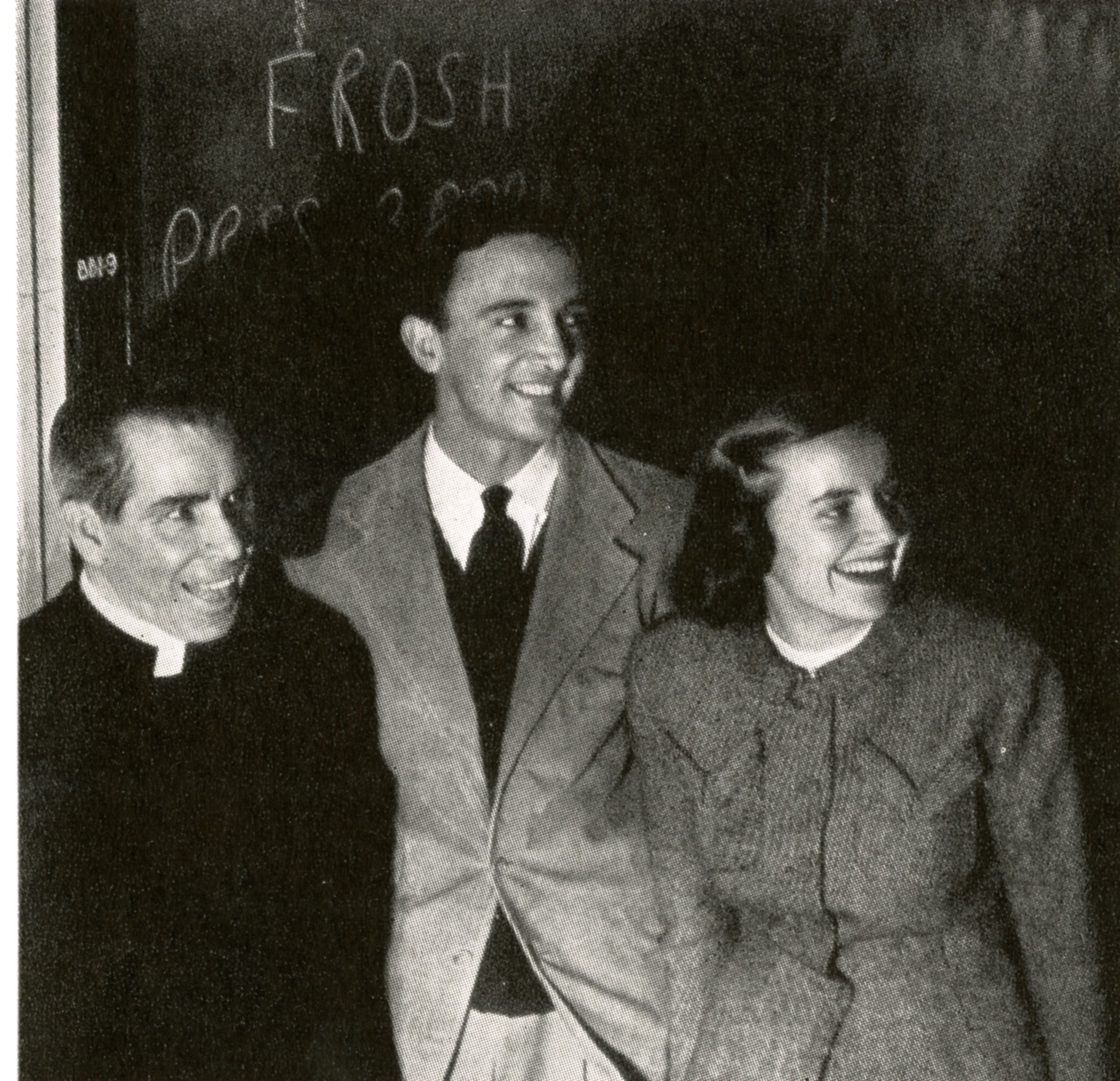
On September 24, 2026, Archbishop Fulton Sheen (1885-1979) will be beatified in St. Louis, achieving the rank of Blessed on the path to canonization. A well-known Catholic figure of the twentieth century, Sheen’s story is ultimately intertwined with the history of American Catholicism and Catholic University.
Following his ordination as a priest in 1919, Sheen arrived at CatholicU, ultimately earning two degrees (JCB in Canon Law and STB in Sacred Theology), both in 1920. While on campus, Sheen expressed noted two faculty members who inspired him (and with whom he would later teach alongside):
“Immeditately after Ordination, I was sent to the Catholic University in Washington to work for a doctorate in philosophy, which required three years of residence and study. Some of the teachers were excellent – such as Dr. Edward Pace and the famous Dr. John A. Ryan, who was a leader in this country in the field of social ethics.” (Sheen, 22)
Pace was a groundbreaking psychologist and professor of philosophy, while Ryan was a sociologist and professor of moral theology, well-known for involvement in Progressive Era reforms from the post-WWI “Bishops’ Program for Social Reconstruction” to advising FDR’s administration during the Great Depression. While he would later have disagreements with these two figures, particularly Ryan, his naming of them in his autobiography suggests the influence they had on his intellectual formation. Throughout this life, Sheen expressed interest in social questions and the role of the Church in the modern world, furthering the topics that these mentors arose. (Reeves, 41)
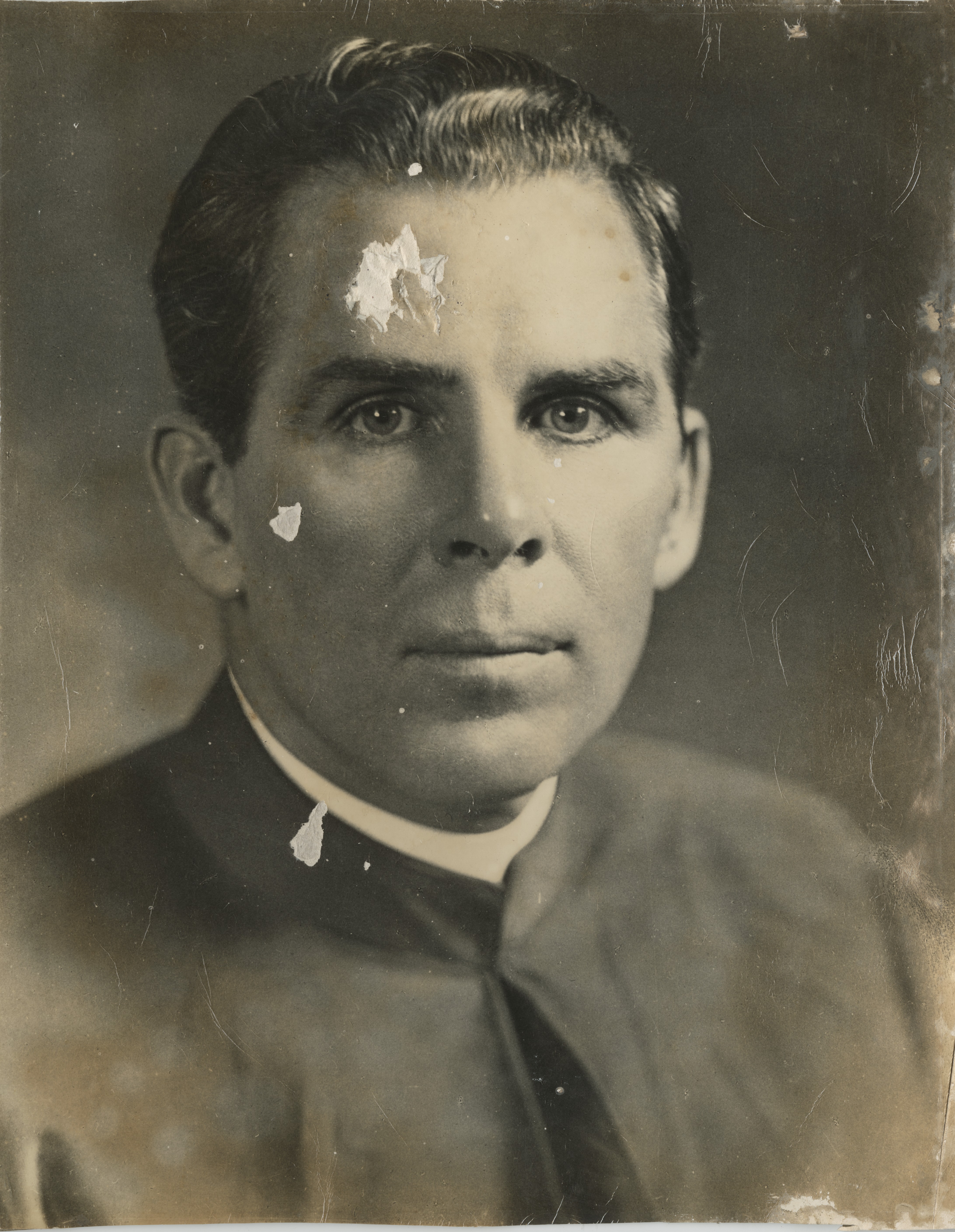
During his time as a student in DC, Sheen would also volunteer as a chaplain at the nearby St. Vincent’s Orphan Asylum. He also reported how before each day of class, he would stop by Caldwell Chapel for an hour of eucharistic adoration, a practice he kept every day since his ordination. (As a CatholicU faculty member, he had a chapel built in his house.) (Sheen, 197-98)
After finishing his degrees at Catholic, Sheen would continue his education in Europe, earning a doctorate from the Catholic University of Leuven in 1923. (Several of his notebooks from his Leuven education are held in the CatholicU archives and accessible here.)
After some initial parish assignments, Sheen would find his way back to CatholicU, with an assignment in the School of Sacred Theology in 1928. He would serve alongside several of his former professors and classmates, but the time was unfortunately tumultuous for him. Struggles with administration, questions about faculty courseloads, and Sheen’s own off-campus activities posed points of conflict between him and his fellow theologians. One event that frustrated Sheen was his inability to get a program in Apologetics launched on campus. Following the anti-Catholicism that dominated the 1928 presidential election (the first with a Catholic leading a major party ticket – Al Smith, Democrat), Sheen had hoped to work to better defend the faith and center an American Catholic identity.
By 1931, Sheen transferred from Theology to the School of Philosophy, where he would remain until his departure from campus in 1950. This transfer proved to be a happier one, with Sheen working alongside then-Dean Ignatius Smith.
During his tenure on campus, Sheen was known for two things – his passionate and popular classroom lectures and his off-campus public speeches, conversion work, and radio programming. Today, most folks recognize him from the latter, with his first public address occurring in 1927, followed by his involvement with the NBC and National Council of Catholic Men affiliated radio program, The Catholic Hour, from 1930-1952. (Transcripts of the radio program can be found here.) But these two elements of his work were often at odds with one another. (Riley, 12-17)

While Sheen’s classes were popular, and he often taught at least two courses a semester, it was often remarked by the administration and his academic colleagues how absent he was from campus. Sheen disdained performing administrative work and committee assignments and often expressed frustration and boredom with faculty meetings. (Reeves, 62) While likely relatable to many academics, his expression of these views and avoidance of the responsibilities in favor of outside commitments frustrated some around campus. That said, students adored him and he served as a faculty advisor to several student groups during his time on campus. (Reeves, 67). He also expressed a profound love for teaching: “I loved teaching. I love it because it seemed so close to the prolongation of the Divine Word.” (Sheen, 54)
Sheen’s love of teaching and public intellectual life can be seen by his perception of what Catholic University was to him, writing in the early 1930s: “The Catholic University is to education what the Catholic Church is to religion, namely, the leaven in the mass. The Church is not one of the sects; it is the unique life of Christ; the Catholic University is not one of American Universities; it is their soul.” (Riley, 25)
At the University Special Collections, we often get asked if we hold notes from Sheen’s campus lectures. While he taught on various topics ranging from Thomism to Marxism, Sheen did not present via notes. In his autobiography, he notes how he strove to familiarize himself with any topic so that he could expound upon it without reference to a written notebook. Many of his classes did turn into book topics or Catholic Hour addresses, but his unique approach to lecture prep has unfortunately left no physical remnants behind. (Sheen, 55)

Departing the University in 1950, Sheen would continue on with an active career of ministry and public intellectual life. He is most well-known for his Emmy award-winning time as the host of the television program, Life is Worth Living (1952-1957). But at the same time, he served as the director for both the Society for the Propagation of the Faith and director of the Pontifical Mission Aid Societies. Thanks to the latter role, Pope John XXIII named Sheen to the Second Vatican Council’s Commission on Missions, the only American on that commission. In his role at the Council, she encouraged missions aligned with Catholic social teaching and increased ecumenical cooperation and religious liberty. (Sheen’s notes from the Council can be found here.) Later in life, he served as Bishop of Rochester, New York before his retirement to New York City.
From his time as a young student on campus to his involvement in the Second Vatican Council, Sheen both shaped and embodied the story of American Catholics in the twentieth century. His words and deeds sought to define a unique American Catholic identity that embodied Catholic teaching and patriotic values without subsuming one or the other. During his life, he actively confronted anti-Catholicism and Communism, explored Catholic social teaching, and emphasized Catholic education’s role in the modern world.
To learn more about the Fulton Sheen collections on campus, contact Special Collections at:
lib-archives@cua.edu
You may also see his collections here:
Fulton Sheen collection (finding aid)
Fulton Sheen collection (digital)
Read more:
Reeves, Thomas C. America’s Bishop: The Life and Times of Fulton J. Sheen. Encounter Books, 2001.
Riley, Kathleen L. Fulton J. Sheen: An American Catholic Response to the Twentieth Century.St. Paul’s/Alba House, 2003.
Sheen, Fulton J. Treasure in Clay: The Autobiography of Fulton J. Sheen. Doubleday, 1980.