
A new exhibition featuring material from Catholic University’s Rare Books Collection is now open in Mullen Library’s May Gallery. Devotion in Print: Catholic Women and Their Books, 1500-1800 explores women’s roles in transforming the written and printed word in the early modern era across multiple genres and disciplines. Far from being passive observers and consumers, these women actively shaped the religious culture of their communities as authors, translators, engravers, publishers, and book owners.
A handful of highlights from the exhibit are featured below:
Women as authors
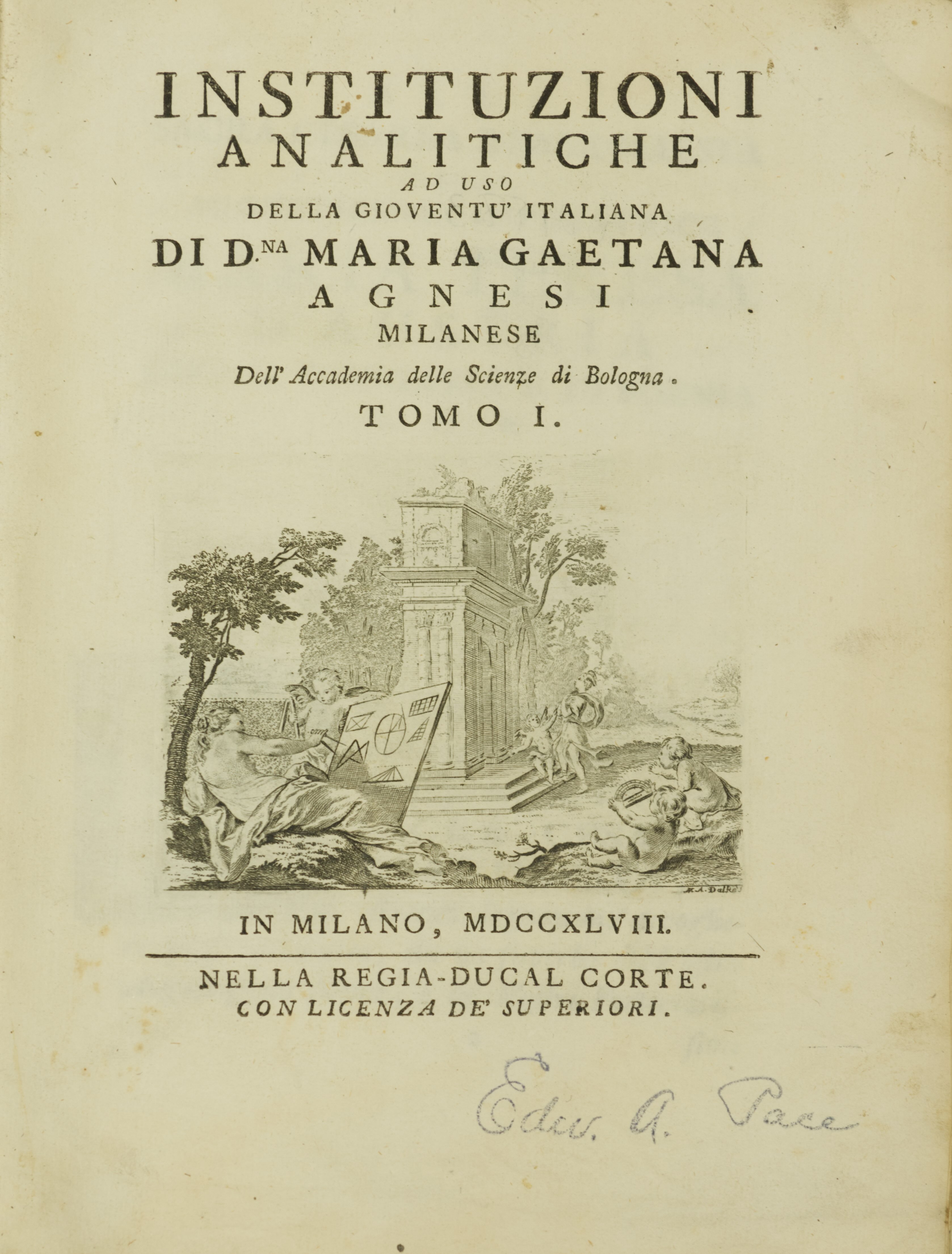
Maria Gaetana Agnesi
Instituzioni analitiche ad uso della gioventu’ Italiana di Dna. Maria Gaetana Agnese Milanese, dell’ Accademia delle Scienze di Bologna
In Milano: Nella regia-ducal corte, 1748
The first woman to hold a professorship in mathematics in Europe, Maria Gaetana Agnesi enjoyed a very public career as a mathematician and natural philosopher. She authored Analytical Institutions in order to provide Italian students with a mathematics textbook in their native language, and the work was widely praised both by fellow mathematicians and by Pope Benedict XIV. In a letter of congratulations, Benedict XIV addressed Agnesi as “Delightful Daughter” and described her accomplishments as “to the glory of our Italy.”
Agnesi viewed her intellectual life and her religious faith as thoroughly intertwined. However, her health began to worsen around 1751 and her father died in 1752, leading her to step away from her academic work in order to devote herself to charitable causes.
Women as translators
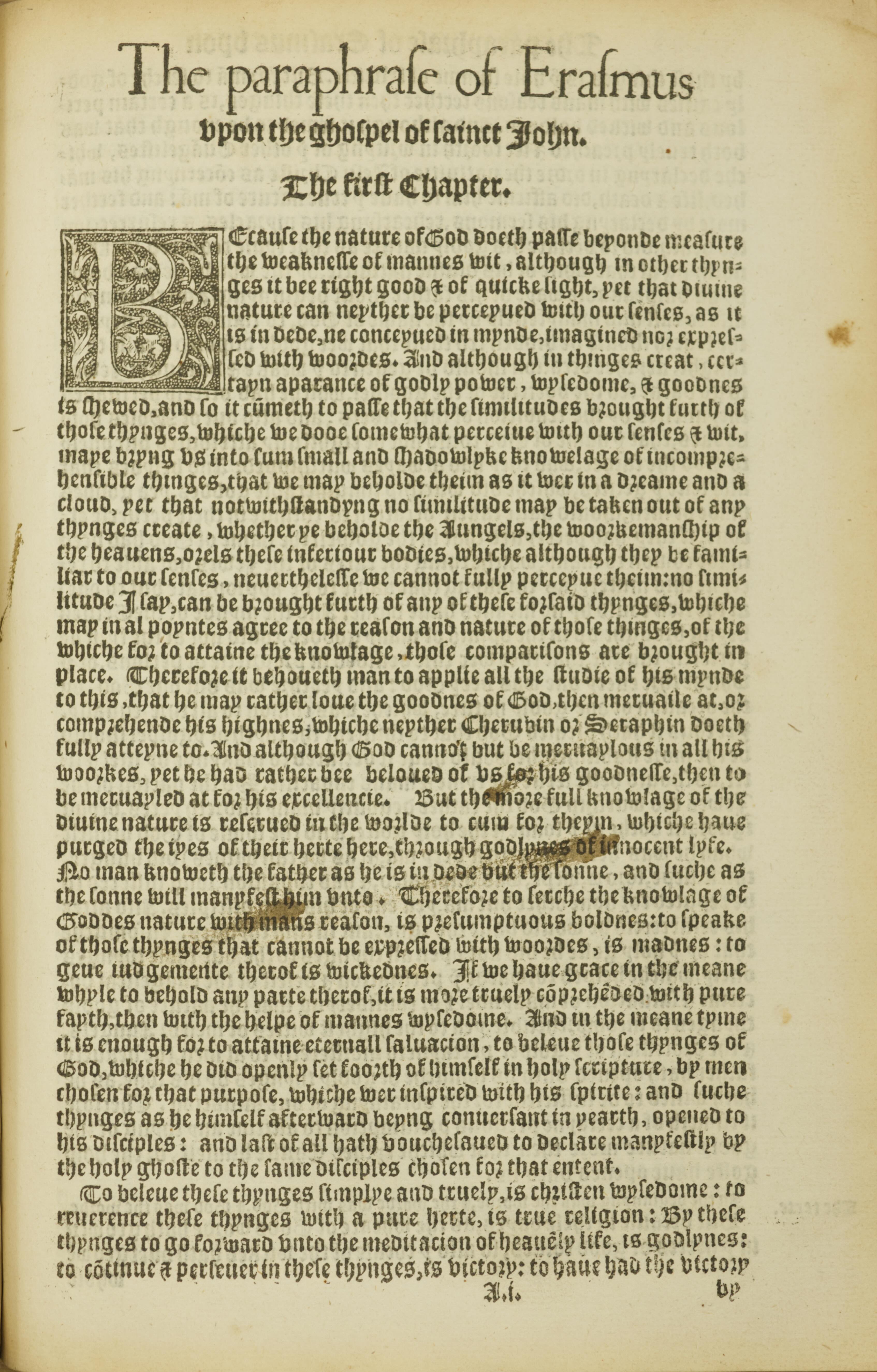
Desiderius Erasmus (d. 1536)
The first tome or volume of the Paraphrase of Erasmus vpon the newe testament
London: Edward Whitchurche, 1548
Katherine Parr, Protestant widow of King Henry VIII, commissioned this translation to support the Protestant religious agenda of her newly crowned stepson, Edward VI.
In an intriguing twist, however, the task of translating the paraphrase of the Gospel of John fell to Edward’s Catholic half-sister, the future Queen Mary I, with assistance from her chaplain, Francis Mallet. Rather than furthering Protestant reform, as Parr had intended, Mary and Mallet subtly emphasized the language within the text most strongly tied Catholic orthodoxy, particularly in passages relating to Marian devotion, papal authority, and a traditional theology of the Eucharist.
A letter from Katherine to Mary relating to this translation is now held by the British Library and can be viewed here (scroll to f. 37r).
Women as illustrators
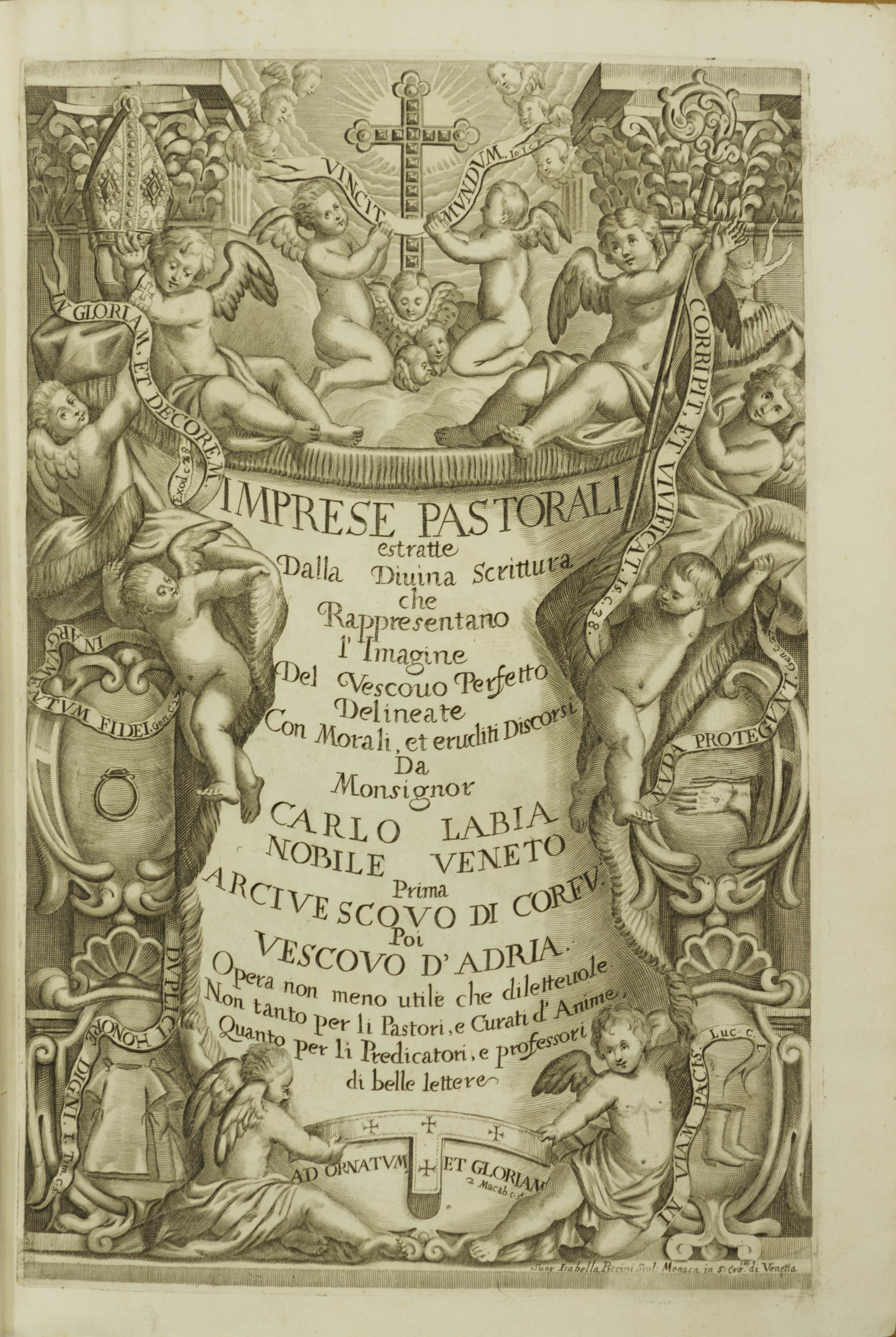
Carlo Labia (1624-1701)
Engraving by Suor Isabella Piccini (1644-1734)
Imprese pastorali estratte dalla Diuina Scrittura che rappresentano l’imagine del vescouo perfetto delineate con morali, et eruditi discorsi da Monsignor Carlo Labia nobile Veneto prima arcivescovo di Corfu, poi vescovo d’Adria
Venice: Apresso Nicolo Pezzana, 1685
Suor Isabella Piccini was born Elisabetta Piccini, the elder daughter of the established Venetian engraver Giacomo Piccini. Her father taught her his craft, and when Isabella entered the Franciscan Convent of Santa Croce in 1666 at the age of 20, she continued in his footsteps as a copperplate engraver. Publishers valued her work highly both for its beauty and for the durability of the engraved plates she produced. Her superiors agreed to excuse her from some of the usual obligations of her religious community so that she would have time to complete the commissions she received, and she used the income this generated to support both the convent and her family.
Women as publishers
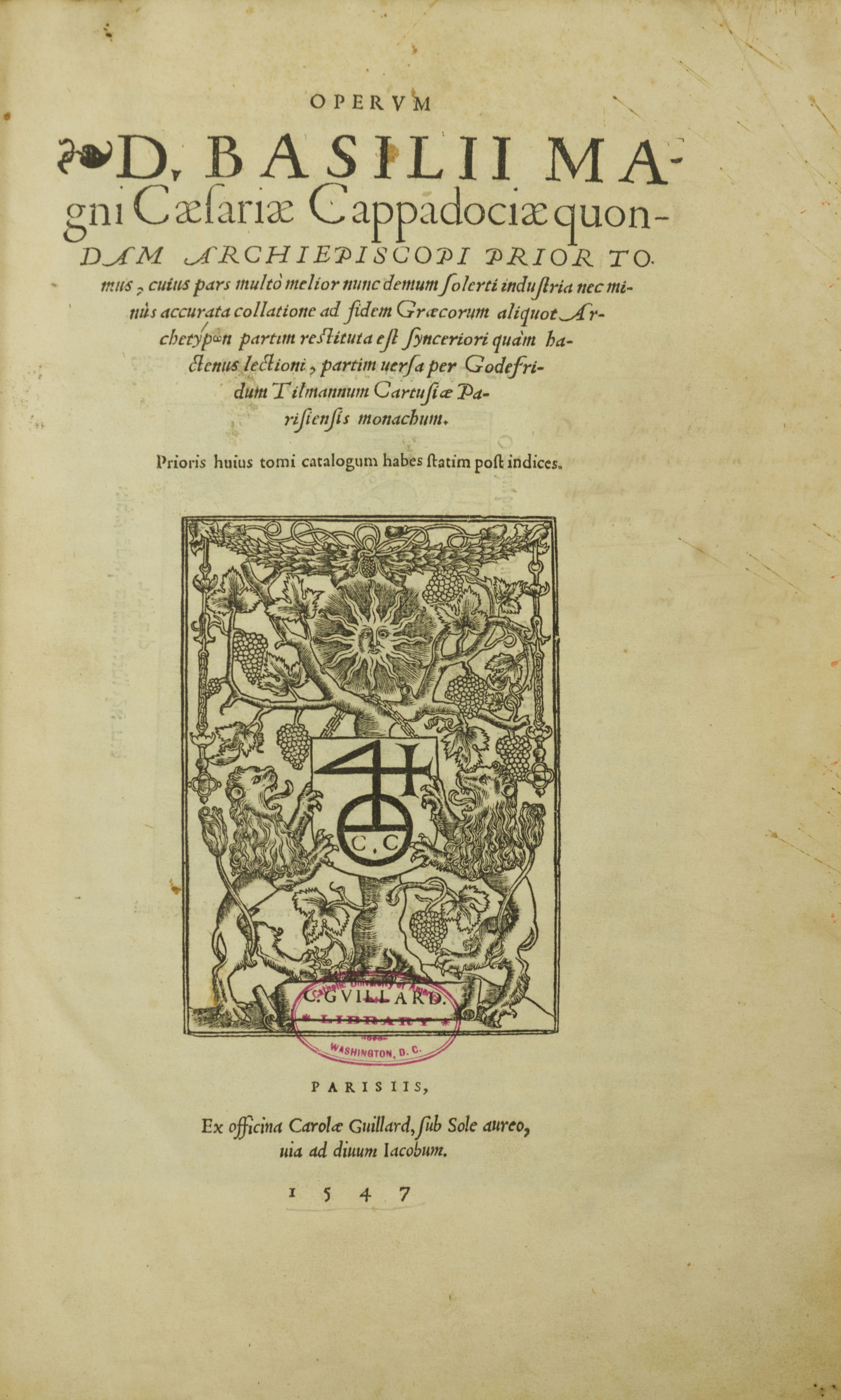
Saint Basil the Great (330-379)
Operum D. Basilii Magni Caesariae Cappadociae quondam archepiscopi prior tomus…
Parisiis: Ex officina Carolae Guillard, 1547
Charlotte Guillard (d. 1557) was one of the most successful and influential printers, male or female, of mid-16th-century Paris. Her first husband, Bertold Rembolt, established a printing business called Soleil d’Or (Golden Sun) in 1502. After his death, Guillard managed the business for two years until she married another printer, Claude Chevallon. Chevallon operated the business until his death in 1537, when Guillard resumed management until her own death 20 years later. Although other French widows operated their late husbands’ printing businesses in the sixteenth century, Guillard’s decision to place her own name on the title pages of most of the works she published (rather than identifying herself as the “widow of” her husband, as many women did) was relatively uncommon.
In the 20 years after Chevallon’s death, Guillard published around 158 editions, many in Latin. Godefroi Tilmann, a Carthusian monk, prepared Latin translations of Greek texts by the early Church Fathers for publication at Guillard’s press.
Women as book owners
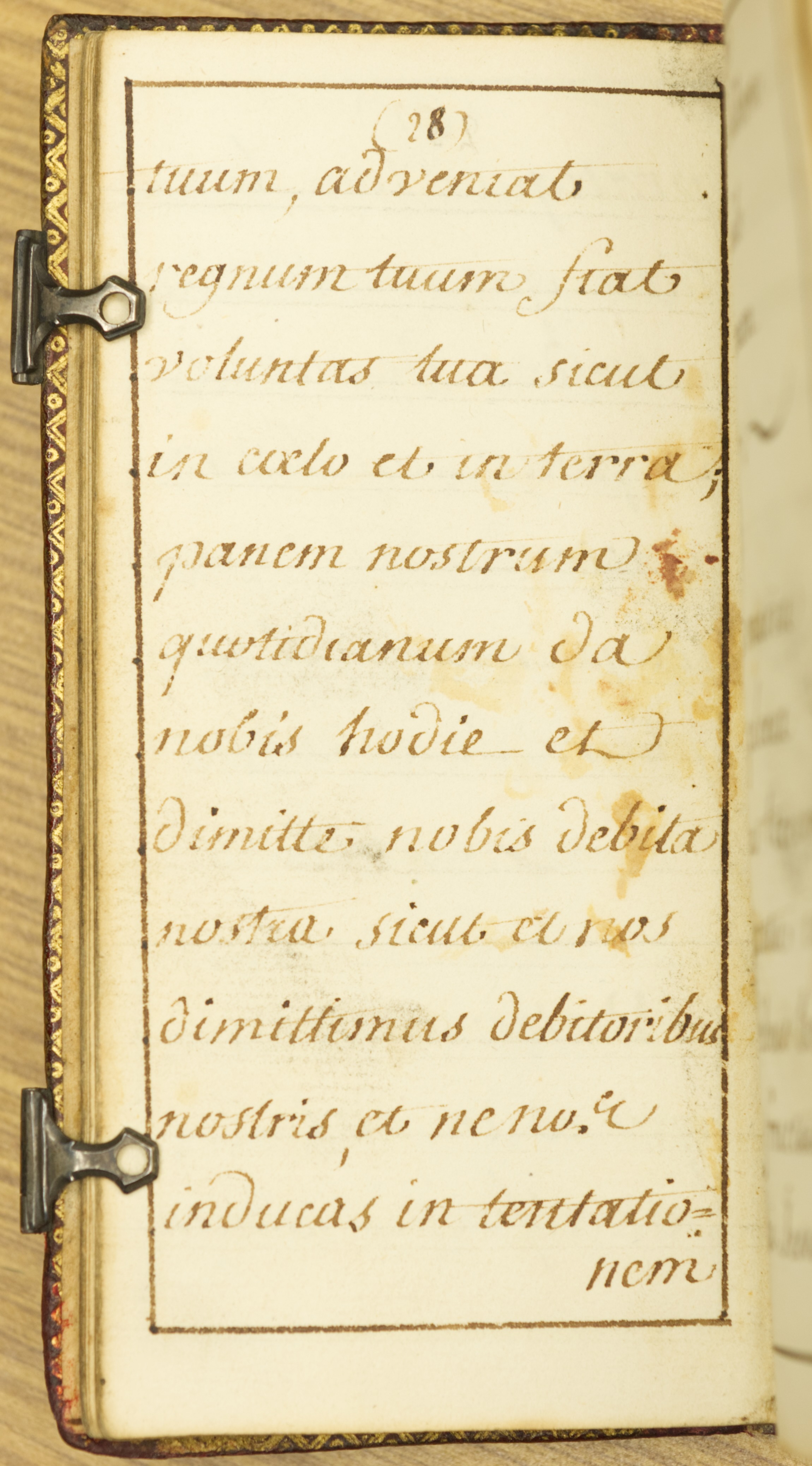
Elisabeth-Claire le Duc (1721-1793)
Manuscript Prayer Book
Late 18th century
Elisabeth-Claire le Duc joined the Parisian Academie royale de musique as a dancer (figurante) in 1737 when she was 15 or 16 years of age. In 1741, she became the mistress of Louis de Bourbon-Condé, Comte de Clermont (1709-1771), a grandson of the King Louis XIV of France. Despite her imperfect early education, she assembled a personal library of approximately 3,000 volumes, including works of literature, science, history, and religion.
Because most surviving archival sources relating to le Duc’s life are financial or legal in nature, little is known of her religious life. The several accounts of her life published in the nineteenth century are not wholly reliable, but some suggest that she became increasingly devout as she grew older. This prayer book, likely written by her and in a binding bearing her coat of arms, contains well-known prayers such as the Angelus in Latin alongside extracts from French-language devotional texts. The final prayer is dated 6 mars [March] 1792, shortly before the end of le Duc’s life.
Books about women
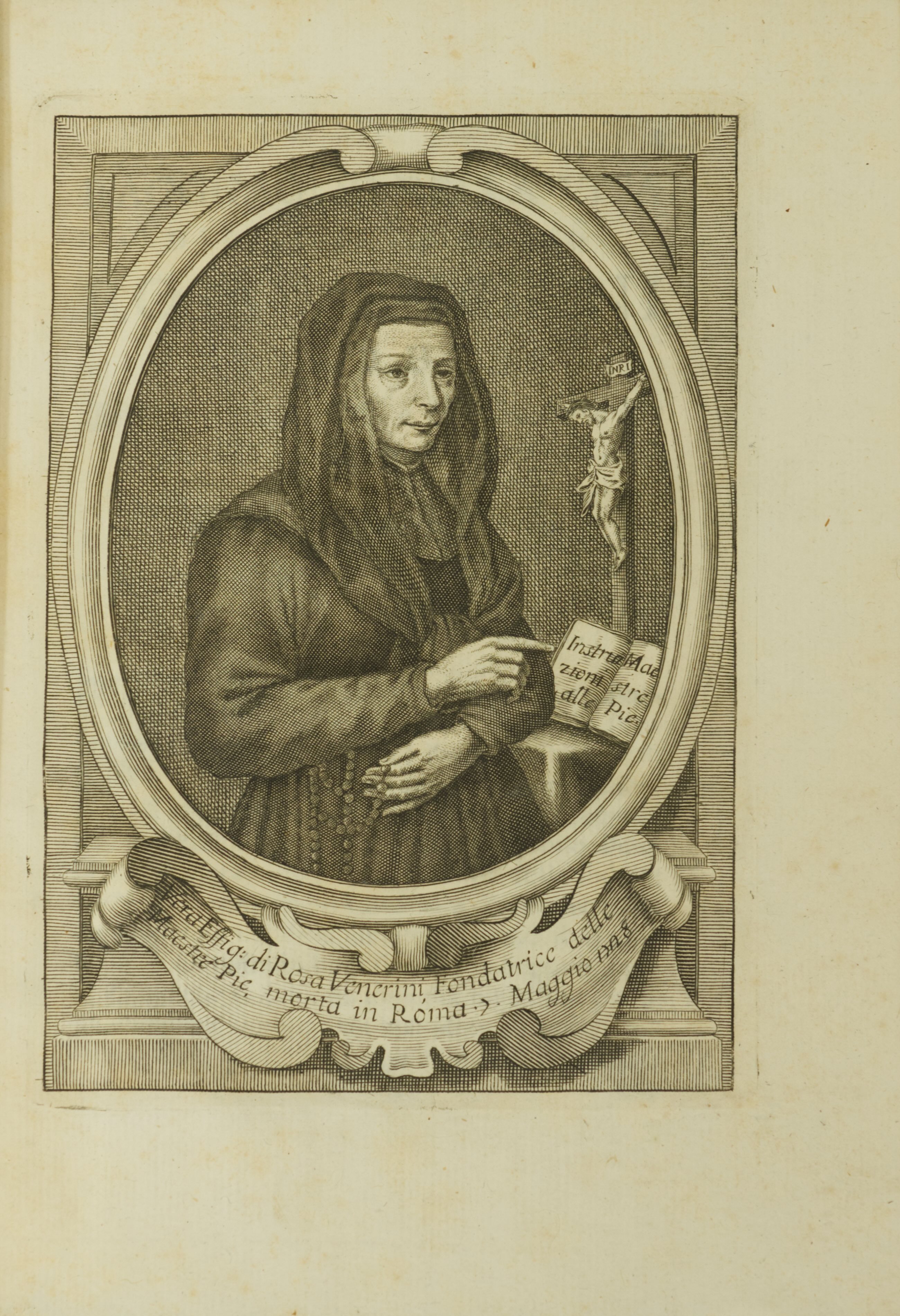
Andrea Girolamo Andreucci (1684-1771)
Ragguaglio della vita della serva di Dio Rosa Venerini Viterbese, Istitutrice delle scuole, e maestre pie, scritto da Andrea Girolamo Andreucci della compagnia di Gesu
Rome: Antonio de Rossi, 1732
In 1684, Saint Rosa Venerini (1656 – 1728) began gathering local girls in her home in Viterbo, Italy, offering informal lessons in Christian doctrine. By the time of her death, she and her followers had founded some 40 schools for impoverished girls across central Italy. Pope Clement XI himself invited her to establish a school in Rome. After attending a lesson there, he thanked her, saying, “with these schools you will sanctify Rome.”
The exhibit will remain open until early November of 2026. To learn more, please visit the exhibit or send an email to lib-rarebooks@cua.edu.